Best Power Station for Camping and Home — Dual-Use Picks That Earn Their Keep (2026)
Why Buy a Dual-Use Power Station?
Most people buy a power station for one reason — emergency backup — and it sits in a closet 364 days a year. A dual-use power station changes that. Take it camping on weekends, keep it plugged in at home for emergency backup during the week. It earns its keep year-round.
For apartment dwellers especially, a dual-use station makes the most sense: you don't have space for separate camping gear and emergency gear, so one device that does both is ideal.
Here's what to look for in a dual-use model:
- Portable enough for camping — Under 20 lbs so you can carry it to a campsite or car trunk
- Powerful enough for home backup — At least 500Wh to run essentials during an outage
- Solar rechargeable — So you can recharge at camp without AC power
- UPS mode — So it stays ready at home and kicks in automatically during outages
- Durable build — Can handle being tossed in a car trunk and used outdoors
🥇 EcoFlow River 2 Pro — Best All-Round Dual-Use
Specs: 768Wh | 800W continuous / 1600W surge | LiFePO4 | 17.2 lbs (7.8 kg) | $529
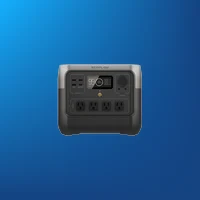
The EcoFlow River 2 Pro is the perfect dual-use power station. It's light enough to toss in your car for a camping trip (17.2 lbs), yet powerful enough to run a mini fridge, CPAP, and lights during a home outage. The fast charging (1 hour to full) means it's always ready to go.
Camping use:
- Powers a portable fridge/freezer for 2-3 days
- Charges phones, tablets, and camera batteries for a week-long trip
- Runs string lights and a fan all night
- Recharges from solar panels (220W max input) during the day
Home backup use:
- Mini fridge + WiFi + lights = 8-10 hours
- CPAP machine = 2 full nights
- TV + soundbar + fan = 6-8 hours
The River 2 Pro has six AC outlets, which means you can run multiple devices without a power strip — useful both at camp and home. It also has a built-in flashlight, handy for camping at night and finding your way during a blackout.
🥈 Jackery Explorer 500 — Best Lightweight Dual-Use
Specs: 518Wh | 500W continuous / 1000W surge | LiFePO4 | 13.3 lbs (6 kg) | $449
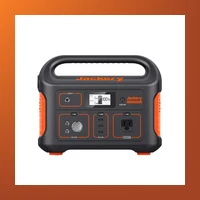
The Jackery Explorer 500 is the lightweight champion of dual-use power stations. At just 13.3 lbs, it's easy to carry in one hand from car to campsite. The built-in handle is comfortable and well-balanced.
Why it's great for both uses:
- Camping: Small enough to fit in a cooler or duffel bag. Powers phones, tablets, a small portable fridge, and camp lights for 2-3 days. Solar panels (100W) recharge it in 6-8 hours of sunlight.
- Home: UPS mode keeps it plugged in and ready. During an outage, it automatically switches to battery. Enough power for a CPAP machine (all night), WiFi router (days), and phone charging.
The Explorer 500's simple interface is another plus — no menus, no apps, just press the button and power comes on. This makes it easy for anyone in the family to use, whether at a campsite or during an emergency.
🥈 Bluetti AC70 — Best Mid-Size Dual-Use
Specs: 768Wh | 1000W continuous / 2000W surge | LiFePO4 | 22 lbs (10 kg) | $499
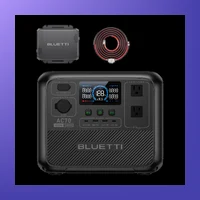
The Bluetti AC70 trades a bit of portability (22 lbs vs 17 lbs) for significantly more power (1000W vs 800W). This makes it a better choice if you need to run larger appliances at home — like a refrigerator — while still being portable enough for car camping.
The AC70 has the best solar charging in its class: it accepts up to 500W of solar input, meaning it can fully recharge from good sun in just 2-3 hours. For campers who spend multiple days off-grid, this is a game-changer.
Best for: Weekend car campers who also want real home backup power (refrigerator + essentials). The extra weight means it's best for car camping, not backpacking.
🥉 Anker Solix C800 Plus — Best Value Dual-Use
Specs: 768Wh | 1200W continuous | LiFePO4 | 20.9 lbs (9.5 kg) | $599

The Anker Solix C800 Plus is the newest entrant in the dual-use market, and it offers the best value for the specs. At the same capacity as the River 2 Pro, it delivers 1200W continuous (50% more) at a competitive price.
The standout feature is the modular battery design — you can add extra battery modules for longer camping trips or extended home outages without buying a whole new unit. The compact size fits neatly in a car trunk or apartment closet.
Best for: Budget-conscious buyers who want maximum power per dollar and the flexibility to expand capacity later.
What to Pack for Camping vs Home
The beauty of a dual-use station is that you use the same device, but you pack different accessories for each scenario:
Camping kit:
- Power station + solar panel (100-200W)
- USB fan or 12V camp fan
- String lights (USB-powered)
- Phone charger cables (USB-A and USB-C)
- Portable fridge plug (if using one)
Home emergency kit:
- Power station (kept plugged in on UPS mode)
- Extension cord (to reach fridge or other appliances)
- LED lantern or flashlights
- Charging cables for all family phones
- CPAP adapter (if applicable)
Quick Comparison
| Model | Capacity | Weight | Camping | Home Backup | Price |
|---|---|---|---|---|---|
| Jackery 500 | 518Wh | 13.3 lbs | ✅ Great | ✅ Good | $449 |
| EcoFlow River 2 Pro | 768Wh | 17.2 lbs | ✅ Great | ✅ Great | $529 |
| Bluetti AC70 | 768Wh | 22 lbs | ✅ Good | ✅ Great | $499 |
| Anker Solix C800 | 768Wh | 20.9 lbs | ✅ Good | ✅ Great | $599 |
Advanced Considerations — What the Spec Sheet Doesn't Tell You
The specs on the box tell you capacity and wattage. Here's what matters for long-term ownership — battery degradation, expansion paths, and real-world gotchas that only become apparent after months of use.
Advanced: EcoFlow River 2 Pro — What to Know Beyond the Spec Sheet
- Battery longevity: 3000 cycles to 80% capacity (LiFePO4). With daily use, this translates to 8-10 years before noticeable degradation. For weekly backup or emergency-only use, the battery will last even longer than the listed cycle count suggests.
- Expansion options: No expansion battery. What you buy is what you get — choose carefully based on future needs.
- Warranty: 5 years. No registration required — coverage starts from date of purchase.
- Temperature performance: 14°F to 113°F (-10°C to 45°C) charging. Can charge in below-freezing temperatures (down to 14°F), giving it an edge for winter emergency use.
- Solar recharging speed: With the max solar input of 220W panels, you can recharge from empty to full in 4-8 hours of direct sunlight — useful for multi-day outages without grid power.
- Weight consideration: At 17.2 lbs (7.8 kg), this is manageable for most adults to move between rooms.
Advanced: Jackery Explorer 500 — What to Know Beyond the Spec Sheet
- Battery longevity: 3000 cycles to 80% capacity (LiFePO4). With daily use, this translates to 8-10 years before noticeable degradation. For weekly backup or emergency-only use, the battery will last even longer than the listed cycle count suggests.
- Expansion options: No expansion battery. What you buy is what you get — choose carefully based on future needs.
- Warranty: 3 years. No registration required — coverage starts from date of purchase.
- Temperature performance: 14°F to 104°F (-10°C to 40°C) charging. Can charge in below-freezing temperatures (down to 14°F), giving it an edge for winter emergency use.
- Solar recharging speed: With the max solar input of 100W panels, you can recharge from empty to full in 4-8 hours of direct sunlight — useful for multi-day outages without grid power.
- Weight consideration: At 13.3 lbs (6 kg), this is manageable for most adults to move between rooms.
Advanced: Bluetti AC70 — What to Know Beyond the Spec Sheet
- Battery longevity: 3000+ cycles to 80% capacity (LiFePO4). With daily use, this translates to 8-10 years before noticeable degradation. For weekly backup or emergency-only use, the battery will last even longer than the listed cycle count suggests.
- Expansion options: No expansion battery. What you buy is what you get — choose carefully based on future needs.
- Warranty: 5 years. No registration required — coverage starts from date of purchase.
- Temperature performance: -4°F to 104°F (-20°C to 40°C) charging. Can charge in below-freezing temperatures (down to -4°F), giving it an edge for winter emergency use.
- Solar recharging speed: With the max solar input of 500W panels, you can recharge from empty to full in 4-8 hours of direct sunlight — useful for multi-day outages without grid power.
- Weight consideration: At 22 lbs (10 kg), this is manageable for most adults to move between rooms.
Final Verdict
If you can only buy one power station and want it to work for both weekend camping trips and home emergencies, the EcoFlow River 2 Pro is the clear winner. It's light enough to carry (17 lbs), powerful enough for real backup (800W, 768Wh), charges in one hour, and handles solar recharging. It's the Swiss Army knife of portable power stations — not the best at any single thing, but the best at doing everything well.
For a lighter and cheaper option, the Jackery Explorer 500 is excellent. For more home backup power, the Bluetti AC70 or Anker Solix C800 are worth the extra weight.
Whichever you pick, you'll never have a power station sitting idle. Every camping trip uses it, and every power outage thanks you for it.
Ready to buy? Check the latest prices on Amazon:
EcoFlow River 2 Pro Jackery Explorer 500 Bluetti AC70 Anker Solix C800 Plus