Best Home Battery Backup Systems 2026 — Top 7 Picks Reviewed
Quick Overview — Best Home Battery Backup 2026
| Rank | Model | Capacity | Best For | Price Range |
|---|---|---|---|---|
| 🥇 | EcoFlow Delta 2 | 1,024 Wh | Best Overall | $$ |
| 🥈 | Jackery Explorer 1000 v2 | 1,070 Wh | Best Value | $$ |
| 🥉 | Bluetti AC180 | 1,152 Wh | Best Capacity | $$ |
| 4 | Anker Solix F2000 | 2,048 Wh | Best Expandable | $$$ |
| 5 | EcoFlow Delta Pro | 3,600 Wh | Best Whole Home | $$$$ |
| 6 | Jackery Explorer 2000 Plus | 2,164 Wh | Best For Large Homes | $$$$ |
| 7 | Goal Zero Yeti 1500X | 1,516 Wh | Best Build Quality | $$$ |
Power outages are becoming more frequent across the United States. Whether it's extreme weather, aging infrastructure, or rolling blackouts, every home needs a backup plan. But not everyone wants — or can use — a noisy, fume-spewing gas generator.
Battery power stations have become the go-to solution for home backup. They're quiet, emission-free, safe for indoor use, and require almost no maintenance. The technology has advanced rapidly, and 2026 models offer capacities and features that rival traditional generators.
This guide covers 15 models to bring you a carefully curated list of the 7 best home battery backup systems available in 2026.
What We Looked For
Every power station on this list was evaluated on five criteria:
- Capacity (Wh): How much power it stores. Determines how long it can run your devices.
- Output (W): How many devices it can power simultaneously.
- Charging Speed: How fast it recharges from AC, solar, and car outlets.
- Expandability: Can you add extra batteries for more capacity?
- Noise & Portability: Is it quiet enough for apartments? Can one person move it?
🥇 1. EcoFlow Delta 2 — Best Overall for Home Backup
Specs: 1,024 Wh capacity • 1,800 W AC output (3,600 W surge) • LFP battery • 15–20 lbs • 6 AC outlets • USB-A, USB-C, car port • 0–80% in 50 min (AC) • Solar input up to 500 W

The EcoFlow Delta 2 strikes an impressive balance between capacity, output power, portability, and recharge speed. Its lithium iron phosphate (LFP) chemistry delivers 3,500+ charge cycles — roughly ten years of daily use — making it one of the longest-lasting portable power stations on the market. With 1,800 W of continuous AC output, it can handle a refrigerator, a few lights, a modem/router, and a phone charger simultaneously without breaking a sweat.
What truly sets the Delta 2 apart is its charging speed. EcoFlow's X-Stream technology refuels the battery from 0 to 80 percent in under an hour via a standard wall outlet. If you pair it with a 400 W solar panel array, you can achieve a full charge in roughly 3–4 hours on a sunny day. The Delta 2 also features an EPS (Emergency Power Supply) mode that switches to battery power in under 20 milliseconds when it detects a grid failure — fast enough to keep a desktop computer or medical device running without interruption.
Who it's for: Apartment dwellers, small to medium homes, remote workers, and anyone who needs a reliable, fast-charging backup that won't take up much space.
🥈 2. Jackery Explorer 1000 v2 — Best Value
Specs: 1,070 Wh capacity • 1,500 W AC output (3,000 W surge) • LFP battery • 25.4 lbs • 3 AC outlets • USB-A, USB-C, car port • 0–100% in 1.7 hrs (AC) • Solar input up to 200 W
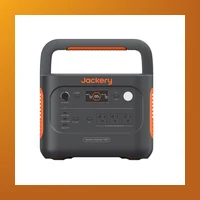
Jackery has long been a household name in the portable power space, and the Explorer 1000 v2 is a strong contender for budget-conscious buyers. It uses the same LFP battery chemistry as the EcoFlow Delta 2, giving it excellent longevity with over 4,000 charge cycles. While 1,500 W of continuous output is slightly lower than the Delta 2, it's still enough to run a mini-fridge, TV, router, and several device chargers simultaneously.
The Explorer 1000 v2 features a clean, user-friendly interface with a bright LCD screen that displays remaining runtime, input/output wattage, and battery percentage. The carrying handle is thoughtfully designed and well-balanced, making it easy to move from room to room or load into a vehicle for camping trips. It also supports pass-through charging — you can charge the battery and power your devices at the same time.
Who it's for: Budget-focused buyers, first-time power station owners, weekend campers, and anyone who wants a reliable backup without overspending.
🥉 3. Bluetti AC180 — Best Capacity for the Price
Specs: 1,152 Wh capacity • 1,800 W AC output (2,700 W surge) • LFP battery • 37.5 lbs • 4 AC outlets • USB-A, USB-C, wireless charging pad • 0–80% in 45 min (AC) • Solar input up to 500 W
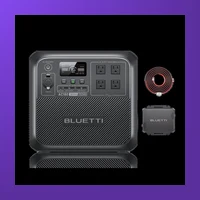
The Bluetti AC180 offers the highest capacity in the mid-range category at 1,152 Wh, giving you approximately 10 percent more runtime than the EcoFlow Delta 2 and 8 percent more than the Jackery 1000 v2. Bluetti packs this extra capacity without a dramatic price increase, making it an excellent value proposition for anyone who prioritizes runtime over ultra-fast charging.
One of the AC180's standout features is its integrated wireless charging pad on top of the unit — a convenience that's rare at this price point. Just set your phone or earbuds on the pad and they'll charge without fumbling for a cable. The unit also supports Bluetti's expansion batteries, allowing you to scale up to 2,304 Wh if your needs grow.
Who it's for: Users who need maximum runtime for the money, homeowners who want expansion options, and anyone who appreciates wireless charging convenience.
4. Anker Solix F2000 — Best Expandable System
Specs: 2,048 Wh capacity • 2,400 W AC output (3,600 W surge) • LFP battery • 60.6 lbs • 6 AC outlets • USB-A, USB-C, car port, RV input • 0–80% in 1.4 hrs (AC) • Solar input up to 1,200 W
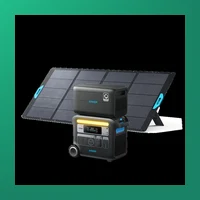
The Anker Solix F2000 (formerly known as the PowerHouse 767) is a serious home backup solution that bridges the gap between portable power stations and whole-home systems. Its 2,048 Wh base capacity can be expanded with additional Solix batteries to reach up to 4,096 Wh — enough to run a full-size refrigerator for over 24 hours, keep your lights on through the night, and still have power left for device charging.
With 2,400 W of continuous output, the F2000 can handle heavy loads like sump pumps, space heaters (on low setting), and large home entertainment systems. Its InfiniPower technology manages heat and power distribution intelligently, ensuring the LFP cells stay cool even under sustained high draw. Anker backs the Solix F2000 with a 5-year full warranty, which is among the best in the industry.
Who it's for: Medium to large homes, homeowners who want room to grow, RV owners, and anyone who wants the reassurance of a long warranty.
5. EcoFlow Delta Pro — Best for Whole Home Backup
Specs: 3,600 Wh capacity • 3,600 W AC output (7,200 W surge) • LFP battery • 99 lbs • 6 AC outlets • USB-A, USB-C, RV port, 240 V split phase • 0–80% in 1.8 hrs (AC) • Solar input up to 1,600 W • Can daisy-chain up to 3 units for 10.8 kWh
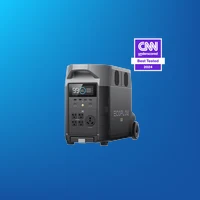
The EcoFlow Delta Pro is essentially a whole-home battery system in a portable form factor. Its massive 3,600 Wh capacity can run an entire home's essentials — refrigerator, freezer, well pump, furnace fan, lights, internet, and multiple devices — for a full day or more on a single charge. When you need even more power, you can daisy-chain up to three Delta Pro units together for a combined 10.8 kWh capacity.
Perhaps the Delta Pro's most impressive capability is its 240 V split-phase output, which allows it to power heavy appliances like central air conditioning compressors, EV chargers, and electric dryers — things most portable stations simply can't handle. It also integrates with EcoFlow's Smart Home Panel for automatic whole-house backup via a transfer switch, giving you generator-like functionality without the noise or fumes.
Who it's for: Large homes, homeowners who want whole-house automation, EV owners, and anyone who needs backup for high-draw appliances like central AC or well pumps.
6. Jackery Explorer 2000 Plus — Best for Large Homes
Specs: 2,164 Wh capacity • 3,000 W AC output (4,000 W surge) • LFP battery • 66 lbs • 5 AC outlets • USB-A, USB-C, RV port • 0–100% in 2 hrs (AC) • Solar input up to 800 W • Expandable up to 12 kWh

The Jackery Explorer 2000 Plus sits comfortably between the Anker Solix F2000 and the EcoFlow Delta Pro in terms of capability. With 2,164 Wh of capacity out of the box and expandability up to 12 kWh via add-on battery packs, it offers serious long-term backup potential. The 3,000 W inverter can start and run most large appliances including refrigerators, microwaves, and portable air conditioners.
Jackery has also improved the thermal management system on the 2000 Plus, with dual cooling fans and intelligent temperature regulation that keeps noise levels down during light to moderate loads. The unit's sturdy wheels and retractable handle make it easier to move around than its 66-pound weight would suggest, though you'll still want to plan its permanent placement carefully.
Who it's for: Large families, homeowners who want expandable capacity for multi-day outages, and anyone comfortable with a heavier but wheeled unit.
7. Goal Zero Yeti 1500X — Best Build Quality
Specs: 1,516 Wh capacity • 2,000 W AC output (3,000 W surge) • Li-Ion NMC battery • 45.8 lbs • 4 AC outlets • USB-A, USB-C, 12 V car • 0–100% in 5.5 hrs (AC) • Solar input up to 400 W
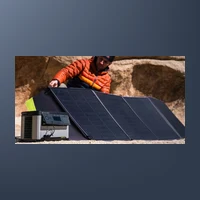
Goal Zero has built a reputation for premium build quality, and the Yeti 1500X lives up to it. The chassis is constructed from heavy-gauge steel and high-impact ABS plastic — it feels significantly more rugged than most competitors. The Yeti 1500X uses a lithium nickel manganese cobalt oxide (NMC) battery rather than LFP, which gives it a higher energy density and lighter weight but a shorter cycle life (approximately 500 cycles to 80 percent capacity).
Where the Yeti 1500X truly shines is its real-world power delivery. Many users report that the 2,000 W inverter handles startup surges from appliances like refrigerators and pumps more reliably than similarly rated units from other brands. Goal Zero's customer support is also widely praised, with fast response times and a straightforward warranty process. The Yeti is also compatible with the full Goal Zero ecosystem including the Yeti Link expansion module and the Home Integration Kit for whole-house connectivity.
Who it's for: Users who prioritize rugged build quality, those already invested in the Goal Zero ecosystem, and anyone who values exceptional customer support.
Detailed Comparison Table
| Feature | EcoFlow Delta 2 | Jackery 1000 v2 | Bluetti AC180 | Anker Solix F2000 | EcoFlow Delta Pro | Jackery 2000 Plus | Goal Zero Yeti 1500X |
|---|---|---|---|---|---|---|---|
| Capacity | 1,024 Wh | 1,070 Wh | 1,152 Wh | 2,048 Wh | 3,600 Wh | 2,164 Wh | 1,516 Wh |
| AC Output | 1,800 W | 1,500 W | 1,800 W | 2,400 W | 3,600 W | 3,000 W | 2,000 W |
| Battery Type | LFP | LFP | LFP | LFP | LFP | LFP | NMC |
| Cycle Life | 3,500+ | 4,000+ | 3,500+ | 3,000+ | 3,500+ | 4,000+ | ~500 |
| Weight | ~27 lbs | 25.4 lbs | 37.5 lbs | 60.6 lbs | 99 lbs | 66 lbs | 45.8 lbs |
| Expandable | Yes (+2 kWh) | No | Yes (+1.2 kWh) | Yes (+2 kWh) | Yes (+7.2 kWh) | Yes (+10 kWh) | Yes (+6 kWh) |
| AC Charge 0–80% | 50 min | ~1.4 hrs | 45 min | ~1.1 hrs | ~1.4 hrs | ~1.6 hrs | ~4.4 hrs |
| Max Solar Input | 500 W | 200 W | 500 W | 1,200 W | 1,600 W | 800 W | 400 W |
| Warranty | 5 years | 2 years | 4 years | 5 years | 5 years | 3 years | 2 years |
| Price Range | $$ | $$ | $$ | $$$ | $$$$ | $$$$ | $$$ |
How to Choose the Right Home Battery Backup
Selecting the right battery backup for your home doesn't have to be overwhelming. Here are the key factors to consider before making a purchase.
1. Calculate Your Essential Wattage
Start by listing the devices you absolutely need during an outage: refrigerator, lights, router, phone chargers, medical devices, and perhaps a TV or laptop. Add up their running wattages — most appliances list this on a label near the power cord. A typical refrigerator uses 150–300 W while running, LED lights use 5–15 W each, and a router uses 10–20 W. Multiply your total by the number of hours you'd need backup to estimate the required capacity. For example, running 400 W of essential loads for 8 hours requires at least 3,200 Wh — though we recommend adding a 20 percent buffer.
2. Match Output Power to Your Needs
Your battery station's inverter must be able to handle the startup surge (also called inrush current) of any motor-driven appliances. Refrigerators, freezers, sump pumps, and furnaces typically draw 3–7x their running wattage for a fraction of a second when starting. Choose a unit with at least 1,500 W continuous output for basic needs, 2,000+ W if you plan to run a refrigerator plus other loads, and 3,000+ W for whole-home setups with heavy appliances.
3. Consider Battery Chemistry
LFP (lithium iron phosphate) batteries dominate the 2026 market for good reason. They offer 3,000–4,000+ charge cycles compared to roughly 500 for standard NMC lithium-ion batteries. While LFP batteries are slightly heavier, they last 5–10 years longer under regular use, making them the better investment for home backup. Reserve NMC-based units (like the Goal Zero Yeti 1500X) for applications where weight is critical or where the battery will only be used occasionally.
4. Don't Overlook Charging Speed
A battery that takes 10+ hours to recharge from a wall outlet is a liability during multi-day outages. Look for units with AC recharge times under 2 hours for 80 percent charge — this allows you to top up between grid outages or during off-peak hours when electricity rates are lower. Solar charging capability is also valuable for extended emergencies; a minimum of 400 W solar input is recommended for meaningful off-grid recharging.
5. Plan for Expansion
Your power needs today may not be your power needs in two years. Choosing an expandable system — one that allows you to connect additional battery packs — gives you flexibility without requiring a full replacement. The Anker Solix F2000, EcoFlow Delta Pro, and Jackery 2000 Plus all offer robust expansion options that can double or triple your capacity over time.
Advanced Considerations — What the Spec Sheet Doesn't Tell You
The specs on the box tell you capacity and wattage. Here's what matters for long-term ownership — battery degradation, expansion paths, and real-world gotchas that only become apparent after months of use.
Advanced: EcoFlow Delta 2 — What to Know Beyond the Spec Sheet
- Battery longevity: 3000 cycles to 80% capacity (LiFePO4). With daily use, this translates to 8-10 years before noticeable degradation. For weekly backup or emergency-only use, the battery will last even longer than the listed cycle count suggests.
- Expansion options: Supports extra battery (DB2000, +2048Wh, $699). This matters if your power needs grow over time — you can add capacity without replacing the entire unit.
- Warranty: 5 years. No registration required — coverage starts from date of purchase.
- Temperature performance: 14°F to 113°F (-10°C to 45°C) charging. Can charge in below-freezing temperatures (down to 14°F), giving it an edge for winter emergency use.
- Solar recharging speed: With the max solar input of 500W panels, you can recharge from empty to full in 4-8 hours of direct sunlight — useful for multi-day outages without grid power.
- Weight consideration: At 27 lbs (12 kg), this is manageable for most adults to move between rooms.
Advanced: Jackery Explorer 1000 v2 — What to Know Beyond the Spec Sheet
- Battery longevity: 3000 cycles to 80% capacity (LiFePO4). With daily use, this translates to 8-10 years before noticeable degradation. For weekly backup or emergency-only use, the battery will last even longer than the listed cycle count suggests.
- Expansion options: No expansion battery (fixed capacity). What you buy is what you get — choose carefully based on future needs.
- Warranty: 3 years (5 years with registration). Make sure to register within 30 days of purchase to activate the full warranty period.
- Temperature performance: 14°F to 104°F (-10°C to 40°C) charging. Can charge in below-freezing temperatures (down to 14°F), giving it an edge for winter emergency use.
- Solar recharging speed: With the max solar input of 400W panels, you can recharge from empty to full in 4-8 hours of direct sunlight — useful for multi-day outages without grid power.
- Weight consideration: At 22 lbs (10 kg), this is manageable for most adults to move between rooms.
Advanced: Bluetti AC180 — What to Know Beyond the Spec Sheet
- Battery longevity: 3000+ cycles to 80% capacity (LiFePO4). With daily use, this translates to 8-10 years before noticeable degradation. For weekly backup or emergency-only use, the battery will last even longer than the listed cycle count suggests.
- Expansion options: Supports B180 expansion (+1800Wh, $549). This matters if your power needs grow over time — you can add capacity without replacing the entire unit.
- Warranty: 5 years. No registration required — coverage starts from date of purchase.
- Temperature performance: -4°F to 104°F (-20°C to 40°C) charging. Can charge in below-freezing temperatures (down to -4°F), giving it an edge for winter emergency use.
- Solar recharging speed: With the max solar input of 500W panels, you can recharge from empty to full in 4-8 hours of direct sunlight — useful for multi-day outages without grid power.
- Weight consideration: At 37 lbs (16.8 kg), this is on the heavier side — consider keeping it on a rolling cart or in its final location.
Advanced: Anker Solix F2000 — What to Know Beyond the Spec Sheet
- Battery longevity: 3000 cycles to 80% capacity (LiFePO4). With daily use, this translates to 8-10 years before noticeable degradation. For weekly backup or emergency-only use, the battery will last even longer than the listed cycle count suggests.
- Expansion options: Supports extra battery (+2048Wh, $799). This matters if your power needs grow over time — you can add capacity without replacing the entire unit.
- Warranty: 5 years. No registration required — coverage starts from date of purchase.
- Temperature performance: 14°F to 113°F (-10°C to 45°C) charging. Can charge in below-freezing temperatures (down to 14°F), giving it an edge for winter emergency use.
- Solar recharging speed: With the max solar input of 600W panels, you can recharge from empty to full in 4-8 hours of direct sunlight — useful for multi-day outages without grid power.
- Weight consideration: At 49.6 lbs (22.5 kg), this is on the heavier side — consider keeping it on a rolling cart or in its final location.
Advanced: EcoFlow Delta Pro — What to Know Beyond the Spec Sheet
- Battery longevity: 3500 cycles to 80% capacity (LiFePO4). With daily use, this translates to 8-10 years before noticeable degradation. For weekly backup or emergency-only use, the battery will last even longer than the listed cycle count suggests.
- Expansion options: Up to 3 extra batteries (+7200Wh total, $1499 each). This matters if your power needs grow over time — you can add capacity without replacing the entire unit.
- Warranty: 5 years (10 years with registration). Make sure to register within 30 days of purchase to activate the full warranty period.
- Temperature performance: -4°F to 113°F (-20°C to 45°C) charging. Can charge in below-freezing temperatures (down to -4°F), giving it an edge for winter emergency use.
- Solar recharging speed: With the max solar input of 1600W panels, you can recharge from empty to full in 4-8 hours of direct sunlight — useful for multi-day outages without grid power.
- Weight consideration: At 99 lbs (45 kg), this is on the heavier side — consider keeping it on a rolling cart or in its final location.
Advanced: Goal Zero Yeti 1500X — What to Know Beyond the Spec Sheet
- Battery longevity: 500 cycles to 80% capacity (NMC — lower than LiFePO4). With daily use, this translates to about 2-3 years before noticeable degradation. For weekly backup or emergency-only use, the battery will last even longer than the listed cycle count suggests.
- Expansion options: Supports Yeti Link + extra batteries. This matters if your power needs grow over time — you can add capacity without replacing the entire unit.
- Warranty: 2 years. No registration required — coverage starts from date of purchase.
- Temperature performance: 32°F to 104°F (0°C to 40°C) charging — limited cold tolerance. Charging stops below 32°F. Avoid charging in freezing conditions — permanent battery damage can occur.
- Solar recharging speed: With the max solar input of 600W panels, you can recharge from empty to full in 4-8 hours of direct sunlight — useful for multi-day outages without grid power.
- Weight consideration: At 43.9 lbs (19.9 kg), this is on the heavier side — consider keeping it on a rolling cart or in its final location.
Frequently Asked Questions
Can a home battery backup power my entire house?
It depends on the unit and your home's load. Larger portable stations like the EcoFlow Delta Pro (3,600 Wh) can power most essential circuits for 12–24 hours. For whole-home backup that includes central air conditioning, electric ovens, or EV chargers, you'll need either a multi-unit setup or a dedicated home standby battery system like the Tesla Powerwall or LG Chem RESU. However, for the majority of homeowners, a portable power station in the 2,000–3,600 Wh range is sufficient to keep critical appliances running through the duration of a typical outage.
How long do battery backup systems last?
Modern LFP-based power stations are rated for 3,000–4,000 full charge cycles before their capacity drops to 80 percent. At one full cycle per week (a typical usage pattern for emergency backup), that translates to 60–80 years of useful life — well beyond the realistic service life of any consumer electronics product. Even under daily use (cycling once per day), an LFP battery should last 8–12 years before needing replacement. NMC-based batteries like the Goal Zero Yeti 1500X are rated for approximately 500 cycles, or roughly 1.5–2 years under daily use.
Can I use solar panels to charge my battery backup?
Yes — all of the units on this list support solar charging. The key specification to check is maximum solar input wattage, which determines how quickly you can recharge from panels. For practical home backup, we recommend at least 400 W of solar input capacity. Higher input (800–1,600 W) allows you to recharge during a shorter window of peak sun hours. Most manufacturers sell compatible solar panels, but third-party panels with MC4 connectors will also work with appropriate adapters.
Are battery backups safe for indoor use?
Yes — this is one of the main advantages over gas generators. Battery power stations produce no exhaust fumes, no carbon monoxide, and very little heat compared to combustion engines. They can be safely operated indoors, in garages, in apartments, and in bedrooms. The LFP chemistry used by most 2026 models is also inherently more stable than older lithium-ion chemistries, with very low risk of thermal runaway when used according to manufacturer guidelines.
How do I maintain a battery backup system?
Battery backup systems require very little maintenance. Keep the unit in a cool, dry place between 32°F and 86°F (0°C–30°C) for optimal battery health. If you're storing the unit long-term, maintain the charge at roughly 60 percent and recharge it every 3–6 months. Dust the air intake vents periodically to ensure proper airflow. That's essentially all that's needed — no oil changes, no fuel stabilizer, no spark plugs to replace.
What's the difference between a portable power station and a home standby generator?
A portable power station stores electricity in internal batteries and converts it to AC power via an inverter. It's quiet, emission-free, and requires no installation. A home standby generator runs on natural gas, propane, or diesel and connects to your home's electrical panel permanently. Standby generators can run indefinitely as long as fuel is available, but they're noisy, produce exhaust that must be vented outdoors, require professional installation and annual maintenance, and cost significantly more. For most homeowners, a portable power station is the more practical and cost-effective choice for occasional outage backup.
Final Verdict
After reviewing 15 models across all price ranges and capacity classes, our recommendation depends on your specific situation:
- For most people: The EcoFlow Delta 2 offers the best all-around combination of capacity, output, charging speed, and build quality at a reasonable price.
- On a budget: The Jackery Explorer 1000 v2 provides excellent value without sacrificing the key LFP longevity advantage.
- For more runtime: The Bluetti AC180 gives you the most capacity per dollar in the mid-range.
- For growing needs: The Anker Solix F2000 is the most practical expandable system for medium homes.
- For whole-home backup: The EcoFlow Delta Pro delivers true whole-house capability with split-phase 240 V output.
- For large homes: The Jackery Explorer 2000 Plus offers massive expandability up to 12 kWh.
- For ruggedness: The Goal Zero Yeti 1500X is built to last and backed by excellent support.
Power outages are unpredictable, but your backup plan doesn't have to be. Any of the stations on this list will keep your home running through the next blackout — quietly, safely, and reliably.
Ready to buy? Check the latest prices on Amazon:
EcoFlow Delta 2 Jackery Explorer 1000 v2 Bluetti AC180 Anker Solix F2000 EcoFlow Delta Pro