Best Portable Power Station Under $300 — Budget Picks That Don't Suck (2026)
You Can Get Reliable Backup Power for Under $300
There's a common misconception that you need to spend $500 or more for a decent portable power station. That's just not true anymore. The sub-$300 category has improved dramatically over the last two years, thanks to the widespread adoption of LiFePO4 batteries and increased competition among brands.
What you get for under $300 in 2026:
- LiFePO4 battery chemistry — 3000+ charge cycles, 8-10 year lifespan
- 200-540Wh capacity — enough to charge phones, laptops, CPAP machines, small appliances
- 300-700W AC output — runs mini-fridges, TVs, fans, and most small electronics
- Solar charging — most models support solar panel input for off-grid recharging
- Quiet, fume-free operation — safe for indoor use during power outages
Below we break down the best picks at every budget level under $300 — with real specs, honest limitations, and guidance on which model suits your specific needs.
⚡ Our Top Pick: EcoFlow River 2 — Best Under $300 Overall
Specs: 256Wh | 300W continuous / 600W surge (X-Boost to 600W) | LiFePO4 | 7.7 lbs (3.5 kg) | $249
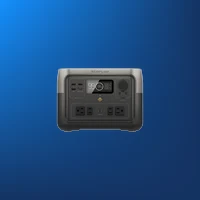
The EcoFlow River 2 is our top pick in this price range for good reason. It charges faster than anything in its class — 0 to 100% in just 60 minutes via AC wall outlet. That's a game-changer when the power goes out and you need to top up quickly between grid interruptions.
What makes it stand out:
- Blazing fast charging — Full recharge in 1 hour (most competitors take 3-5 hours)
- X-Boost technology — Runs devices up to 600W (mini-fridges, small microwaves)
- Lightweight — At 7.7 lbs, it's easy to carry anywhere
- UPS mode — Sub-30ms switch time for sensitive electronics
- App control — Monitor battery, control outlets, adjust settings via WiFi
In an emergency, the River 2 can run a mini-fridge for 4-5 hours, charge a phone 15+ times, power a WiFi router for 20+ hours, or run a CPAP machine through the night. The 60-minute recharge means you can cycle it multiple times during a day-long outage.
🥇 Jackery Explorer 300 Plus — Best Lightweight Budget Pick
Specs: 293Wh | 300W continuous / 600W surge | LiFePO4 | 7.1 lbs (3.2 kg) | $279
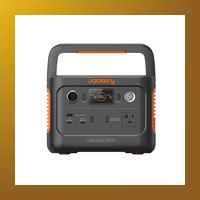
The Jackery Explorer 300 Plus is the lightest power station in this roundup that still includes a proper AC inverter. At just 7.1 lbs — lighter than a bowling ball — it's the obvious choice if you need to carry your power station regularly, whether from closet to living room or from car to campsite.
What makes it stand out:
- Ultra-lightweight — 7.1 lbs, the lightest in this class with AC output
- Clear, simple display — Big battery percentage, easy to read without glasses
- One-button operation — Press AC button and plug in. No menus or apps required
- UPS mode — Leave it plugged in for automatic backup (sub-30ms switch)
- Durable build — Solid handle, rounded corners, easy to grip and carry
Real-world runtime: CPAP machine (8+ hours), phone charges (15+), laptop (4-5 charges), LED light string (20+ hours), mini-fridge (3-4 hours). It won't run a full-size refrigerator or a power tool, but for emergency essentials, it delivers reliably.
🥈 Anker Solix C300 DC — Best for USB and Small Electronics
Specs: 288Wh (90,000mAh) | 300W DC output (no AC inverter) | LiFePO4 | 9.8 lbs (4.4 kg) | $199

The Anker Solix C300 DC is a unique entry in this category — it has no AC inverter, which means it can't power standard wall-plug devices. But for charging USB-C laptops, phones, tablets, cameras, and DC-powered devices, it's the most affordable and efficient option here.
What makes it stand out:
- Lowest price — At $199, it's the most affordable quality power station
- High-speed USB-C — 140W USB-C output charges most laptops at full speed
- No inverter loss — DC-only means higher efficiency for USB devices (90%+ vs ~85% for AC inverter models)
- Durable — Drop-resistant design, IP rating for dust protection
This is the right choice if you mainly need to charge phones, tablets, laptops, and USB-powered lights during outages. Pair it with a USB-powered LED lamp and you have a complete emergency lighting + communication kit for under $250 total.
Important limitation: No AC outlets. This unit won't run a mini-fridge, TV, CPAP machine (unless it has a DC adapter), or any device that needs a standard wall plug.
🥉 Bluetti EB55 — Most Capacity Under $300
Specs: 537Wh | 700W continuous / 1400W surge | LiFePO4 | 16.5 lbs (7.5 kg) | $299
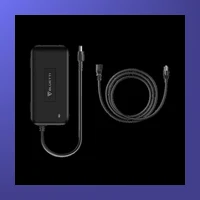
The Bluetti EB55 is the capacity king under $300. With 537Wh — nearly double what the EcoFlow River 2 offers — it's the best choice if you need to run multiple devices or want the longest runtime in an emergency.
What makes it stand out:
- Massive capacity — 537Wh, nearly double the competition at this price
- 700W AC output — Can run larger devices like mini-fridges, TVs, and power tools
- Two wireless charging pads — Drop your phone on top, no cable needed
- UPS mode — Sub-20ms switch time for sensitive equipment
- Solar input — 500W max, supports fast solar recharging
Real-world runtime: Mini-fridge (6-8 hours), TV + router + phone charging (8-10 hours), CPAP machine (12+ hours), laptop (8+ charges), phone (30+ charges). The EB55 is the only model here that can realistically run a mini-fridge through a full workday outage.
At $299, it's at the very top of our budget range, but the extra capacity makes it worth every dollar if you need more than just device charging.
What to Look for in a Budget Power Station
When shopping under $300, every dollar counts. Here's what to prioritize:
- LiFePO4 battery — Non-negotiable. Avoid older NMC battery models that degrade in 2-3 years. LiFePO4 lasts 8-10 years with regular use.
- AC output wattage — 300W is sufficient for essentials. 500-700W opens up mini-fridges and power tools.
- Capacity (Wh) — 250-300Wh covers phones and laptops. 500Wh+ can run small appliances. Balance capacity against portability.
- Number of outlets — At least 2 AC outlets and 2 USB ports for real-world use. A USB-C PD port (60W+) is a nice bonus.
- Recharge speed — Fast AC charging (1-2 hours) is a genuine advantage during multi-day outages when grid power comes back intermittently.
- Weight — Under 10 lbs is easily portable. 10-20 lbs is manageable for room-to-room movement. Over 20 lbs is semi-permanent.
Budget Power Station FAQs
Can a $200 power station run a refrigerator?
Not a full-size kitchen refrigerator (which draws 600-800W running and 1200-2000W starting). But a compact mini-fridge (50-100W) can run for several hours on models with 500Wh+ capacity like the Bluetti EB55.
How long will a budget power station last in an outage?
For typical essentials — phones, WiFi router, LED lights, laptop — a 250-300Wh model gives 8-12 hours of backup. A 500Wh+ model extends that to 15-24 hours. For multi-day outages, solar panels or fast AC recharging (1-hour recharge) make a huge difference.
Is it safe to use a budget power station indoors?
Yes — all the models listed here use LiFePO4 batteries and produce no fumes or emissions. They're safe for indoor use. Never use a gas generator indoors — that's the main advantage of a portable power station.
Can I take a budget power station on a plane?
No. FAA regulations limit lithium batteries to 100Wh (160Wh with airline approval) in carry-on luggage. All the models here exceed that. They're fine for car travel, RV use, and camping, but not for air travel.
Do I need solar panels?
Not required, but recommended if you live in an area with frequent or extended outages. All models here support solar input. A 100W solar panel ($100-150) can recharge a 250Wh power station in 3-5 hours of direct sunlight, giving you indefinite backup capability.
Advanced Considerations — What the Spec Sheet Doesn't Tell You
The specs on the box tell you capacity and wattage. Here's what matters for long-term ownership — battery degradation, expansion paths, and real-world gotchas that only become apparent after months of use.
Advanced: EcoFlow River 2 — Best Under $300 Overall — What to Know Beyond the Spec Sheet
- Battery longevity: 3000 cycles to 80% capacity (LiFePO4). With daily use, this translates to 8-10 years before noticeable degradation. For weekly backup or emergency-only use, the battery will last even longer than the listed cycle count suggests.
- Expansion options: No expansion battery. What you buy is what you get — choose carefully based on future needs.
- Warranty: 5 years. No registration required — coverage starts from date of purchase.
- Temperature performance: 14°F to 113°F (-10°C to 45°C) charging. Can charge in below-freezing temperatures (down to 14°F), giving it an edge for winter emergency use.
- Solar recharging speed: With the max solar input of 110W panels, you can recharge from empty to full in 4-8 hours of direct sunlight — useful for multi-day outages without grid power.
- Weight consideration: At 7.7 lbs (3.5 kg), this is manageable for most adults to move between rooms.
Final Verdict — Which Budget Power Station Should You Buy?
If you need a great all-around power station for under $300, the EcoFlow River 2 is our top pick — its 1-hour recharge speed and X-Boost technology are unmatched at this price. For weight-conscious buyers, the Jackery Explorer 300 Plus is the lightest model in this class with AC output. If you mainly charge USB and DC devices, the Anker Solix C300 DC at $199 is a fantastic value. And if raw capacity is your priority, the Bluetti EB55 gives you nearly double the runtime of any competitor at $299.
Whichever you choose, skip the cheap off-brand units from unknown sellers. Stick with EcoFlow, Jackery, Anker, or Bluetti — they have real warranties, UL certifications, and replacement parts available. A $50 saving isn't worth the risk of a battery failure during an emergency.
Ready to buy? Check the latest prices on Amazon: