Standalone vs Expandable Power Stations — Which Type Should You Buy?
Standalone vs Expandable — What's the Difference?
When you start shopping for a portable power station, you'll quickly notice two categories: standalone (fixed capacity — what you see is what you get) and expandable (you can add extra batteries later to increase capacity). Both have their place, but choosing the wrong type can cost you hundreds of dollars or leave you without enough power when you need it most.
We analyzed the pros, cons, and real-world cost implications of both approaches across multiple brands and price points. Here's what we found.
The short version: Choose standalone if your power needs are fixed and you want the lightest, most affordable option. Choose expandable if you anticipate growing needs, want to spread costs over time, or need a system that can scale from apartment backup to whole-home support.
🥇 Jackery Explorer 1000 v2 — Best Standalone Overall
Specs: 1070Wh | 1500W continuous / 3000W surge | LiFePO4 | 22 lbs (10 kg) | ~$799
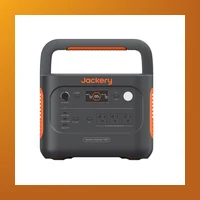
The Jackery Explorer 1000 v2 is the gold standard of standalone power stations. Its 1070Wh capacity and 1500W pure sine wave inverter handle everything an apartment dweller needs during an outage: a refrigerator (600–800W startup), CPAP machine (30–60W), router and modem (10–20W), LED lights (10–30W), plus phones, tablets, and laptops.
At 22 lbs, it's genuinely portable — one person can easily carry it from room to room or down to the car trunk. The switch to LiFePO4 battery chemistry in the v2 model gives it 3,000 cycles to 80% capacity, roughly 8–10 years of regular use. That's a massive upgrade over the original Explorer 1000's aging NMC battery.
Jackery's strength is simplicity. The interface is intuitive: one button to turn on, clear LED indicators for charge level and output wattage. No app required (though one is available), no confusing modes, no extra setup. It's the definition of "plug and play."
Jackery's 3-year standard warranty extends to 5 years if you register the product within 30 days of purchase — a simple step that's worth remembering.
🥈 EcoFlow River 2 Pro — Best Portable Standalone
Specs: 768Wh | 800W continuous / 1600W surge | LiFePO4 | 17.2 lbs (7.8 kg) | ~$529
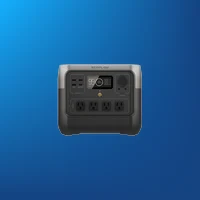
The EcoFlow River 2 Pro is the perfect standalone for users who prioritize portability above all else. At 17.2 lbs, it's one of the lightest power stations with real home backup capability. The 768Wh capacity handles 4–8 hours of essential appliances: a mini fridge, CPAP, modem/router, lights, and phone charging.
What makes the River 2 Pro stand out is its incredible charging speed: 0–100% in just 60 minutes via AC. That's the fastest in its class by a wide margin — most competitors take 1.5–2 hours for a full charge. This matters during multi-day outages when you need to top up quickly between grid availability windows.
The 800W inverter handles most apartment essentials, and the 1600W surge capacity covers startup spikes from small refrigerators. The EcoFlow app provides real-time monitoring, and the UPS mode switches in under 10ms — fast enough for sensitive electronics.
Like the Jackery 1000 v2, the River 2 Pro uses LiFePO4 cells rated for 3,000 cycles. EcoFlow backs it with a 5-year warranty with no registration required — a nice advantage over Jackery's registration-based extension.
🥉 Anker SOLIX C300 DC — Best Budget Standalone
Specs: 288Wh | 300W continuous / 600W surge | LiFePO4 | 9.6 lbs (4.4 kg) | ~$199

The Anker SOLIX C300 DC is the ultimate ultra-portable standalone. At under 10 lbs and just 288Wh, it's not for running a refrigerator — but it's perfect for keeping your essential electronics alive during short outages. Phones, tablets, laptops, a router, LED desk lamp, and a small fan can run for several hours each.
What makes the C300 DC special is its versatility. It has an integrated flashlight, wireless charging pad on top, and enough USB ports (including USB-C with 60W PD) to charge every device in your household simultaneously. The 300W inverter handles most small electronics.
For apartment dwellers in areas with short, infrequent outages (1–3 hours), the C300 DC is a smart, affordable standalone solution. It's also excellent as a travel companion or desk UPS. The LiFePO4 battery is rated for 3,000 cycles, and Anker's standard 5-year warranty applies with no registration needed.
The trade-off is clear: you can't expand it, and 288Wh won't power large appliances. But as a "grab and go" emergency power source, it's hard to beat at this price.
🥇 Bluetti AC200L — Most Expandable Power Station
Specs: 2400Wh | 2400W continuous / 4800W surge | LiFePO4 | 61.7 lbs (28 kg) | ~$1,499
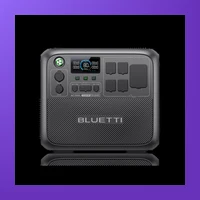
The Bluetti AC200L is the king of expandability. With a base capacity of 2,400Wh and support for up to two extra B230 or B300 batteries, you can scale to over 8kWh — enough to power a refrigerator, freezer, lights, medical devices, and multiple electronics for 24–48 hours. The 2,400W inverter handles practically any household appliance, including 240V split-phase equipment when connected to the right transfer switch.
What makes the AC200L special for expandability is the flexibility. You don't need to buy the extra batteries upfront — start with the base unit and add capacity as your budget or needs grow. Each additional B300 battery (+3,072Wh) costs approximately $999, so the full system is a significant investment, but it's a future-proof one.
The AC200L charges from 0–80% in 1.5 hours on AC, and its 1,200W solar input means you can fully recharge from solar panels in 2–3 hours of direct sunlight. The Bluetti app provides comprehensive monitoring, and the 5-year warranty adds peace of mind for a system that might serve you for a decade or more.
The main downside is weight: at 61.7 lbs (28 kg), this is not a portable unit. It belongs on a rolling cart or in a semi-permanent location.
🥈 EcoFlow Delta 2 — Best Expandable Ecosystem
Specs: 1024Wh | 1800W continuous / 2700W surge | LiFePO4 | 27 lbs (12 kg) | ~$999

The EcoFlow Delta 2 strikes the best balance between base performance and expansion potential. With 1,024Wh base capacity and support for the DB2000 expansion battery (+2,048Wh, ~$699), you can triple your capacity to over 3kWh — enough for multi-day outage coverage. The 1,800W inverter handles all standard apartment appliances including full-size refrigerators.
What sets the Delta 2 apart is ecosystem polish. The EcoFlow app is the best in the industry, offering real-time monitoring, remote control, charging speed adjustment, and generator auto-start configuration. The 0–80% AC charge in 50 minutes is the fastest in its class. And the UPS mode switches in under 10ms for seamless power transition.
The expansion battery connects effortlessly — no tools, no cables beyond the included harness. The extra 2,048Wh unit sits alongside the main station, doubling runtime without doubling footprint. The combined system weighs about 60 lbs and functions as a single, integrated power solution.
At $999 for the base unit plus $699 for the expansion, the total system cost of roughly $1,698 for 3,072Wh works out to about $0.55 per Wh — competitive pricing for the features and build quality. EcoFlow's 5-year warranty (no registration required) is a strong selling point.
🥉 Bluetti AC180 — Expandable on a Budget
Specs: 1152Wh | 1800W continuous / 3600W surge | LiFePO4 | 37 lbs (16.8 kg) | ~$799
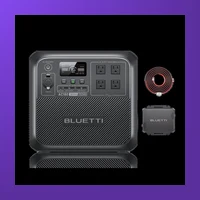
The Bluetti AC180 offers an entry point into expandable power without the premium price tag. At 1,152Wh base capacity with support for the B180 expansion battery (+1,800Wh, ~$549), the total system reaches nearly 3kWh for around $1,348 — about $0.45 per Wh, one of the best value ratios in the expandable category.
The 1,800W inverter is identical to the Delta 2's, handling all standard apartment appliances. The 0–80% AC charge in 1 hour is competitive, and the 500W solar input provides decent off-grid recharging speed. The Bluetti app offers solid monitoring features.
Where the AC180 really shines is cold-weather performance: it can charge at temperatures down to -4°F (-20°C), making it the best expandable option for users in cold climates. Most competitors can't charge below 14°F (-10°C), and older NMC-based units stop charging at 32°F (0°C).
The trade-offs are weight (37 lbs — not as portable as standalone units but manageable) and a slightly less polished app experience compared to EcoFlow. The 5-year warranty (no registration required) is solid.
Cost Comparison: Standalone vs Expandable Over Time
The most important question for most buyers: is expandability worth the extra upfront cost? The answer depends on how your needs evolve.
Scenario 1: Fixed, known needs. If you know exactly what you need to power and your appliances won't change, a standalone unit is almost always better value. The Jackery Explorer 1000 v2 at $799 gives you 1,070Wh for $0.75 per Wh — very competitive pricing for a quality unit that's lighter and simpler than any expandable system.
Scenario 2: Gradual expansion. If you expect your needs to grow — maybe you're starting with CPAP backup and later want to cover a refrigerator — an expandable system saves money over time. Starting with the EcoFlow Delta 2 at $999 gives you 1,024Wh now. Adding the DB2000 later for $699 gives you 3,072Wh total for $1,698. If you'd bought a 3kWh standalone unit upfront, you'd have paid $1,800+ and either had to replace it or buy a second unit.
Scenario 3: Maximum future-proofing. If you want the most capacity possible, the Bluetti AC200L with B300 batteries scales to over 8kWh. That's enough to run critical home appliances for 2–3 days. The upfront cost is higher ($1,499 base + $999 per extra battery), but the ability to add capacity in chunks makes it manageable.
Decision Guide: Which Type Belongs in Your Apartment?
Choose standalone if:
- Your power needs are consistent and unlikely to grow
- You value portability and want a lighter unit
- You have a limited budget and need the best $/Wh ratio
- You want simplicity — no extra batteries to manage
- Your outages are typically short (under 8 hours)
Choose expandable if:
- You expect your power needs to increase over time
- You want to spread the investment across multiple purchases
- You face multi-day outages (hurricanes, winter storms)
- You want a single system that can grow with your home
- You're willing to sacrifice portability for future capacity
Final Verdict
Choose standalone (Jackery Explorer 1000 v2) if: You have clear, fixed power needs, want the lightest and simplest solution, and prefer to make one purchase that covers everything. The Jackery 1000 v2 offers excellent value at $0.75/Wh with solid build quality and a proven track record.
Choose expandable (EcoFlow Delta 2) if: You anticipate growing power needs, want to start with a solid base and add capacity later, and value the app ecosystem and fast charging that EcoFlow provides. The Delta 2's expansion path gives you real flexibility without a huge upfront commitment.
Choose max expandable (Bluetti AC200L) if: You're planning for worst-case scenarios — multi-day outages during extreme weather — and want the most capacity possible in a single system. The AC200L's flexibility to add up to 8kWh of storage makes it the ultimate future-proof choice for serious home backup.
Both approaches work. The right one depends on how you answer one question: do you know exactly how much power you'll need next year?
Advanced Considerations — What the Spec Sheet Doesn't Tell You
The specs on the box tell you capacity and wattage. Here's what matters for long-term ownership — battery degradation, expansion paths, and real-world gotchas that only become apparent after months of use.
Advanced: Jackery Explorer 1000 v2 — What to Know Beyond the Spec Sheet
- Battery longevity: 3000 cycles to 80% capacity (LiFePO4). With daily use, this translates to 8-10 years before noticeable degradation. For weekly backup or emergency-only use, the battery will last even longer than the listed cycle count suggests.
- Expansion options: No expansion battery (fixed capacity). What you buy is what you get — choose carefully based on future needs.
- Warranty: 3 years (5 years with registration). Make sure to register within 30 days of purchase to activate the full warranty period.
- Temperature performance: 14°F to 104°F (-10°C to 40°C) charging. Can charge in below-freezing temperatures (down to 14°F), giving it an edge for winter emergency use.
- Solar recharging speed: With the max solar input of 400W panels, you can recharge from empty to full in 4-8 hours of direct sunlight — useful for multi-day outages without grid power.
- Weight consideration: At 22 lbs (10 kg), this is manageable for most adults to move between rooms.
Advanced: EcoFlow River 2 Pro — What to Know Beyond the Spec Sheet
- Battery longevity: 3000 cycles to 80% capacity (LiFePO4). With daily use, this translates to 8-10 years before noticeable degradation. For weekly backup or emergency-only use, the battery will last even longer than the listed cycle count suggests.
- Expansion options: No expansion battery. What you buy is what you get — choose carefully based on future needs.
- Warranty: 5 years. No registration required — coverage starts from date of purchase.
- Temperature performance: 14°F to 113°F (-10°C to 45°C) charging. Can charge in below-freezing temperatures (down to 14°F), giving it an edge for winter emergency use.
- Solar recharging speed: With the max solar input of 220W panels, you can recharge from empty to full in 4-8 hours of direct sunlight — useful for multi-day outages without grid power.
- Weight consideration: At 17.2 lbs (7.8 kg), this is manageable for most adults to move between rooms.
Advanced: Bluetti AC200L — What to Know Beyond the Spec Sheet
- Battery longevity: 4000+ cycles to 80% capacity (LiFePO4). With daily use, this translates to 8-10 years before noticeable degradation. For weekly backup or emergency-only use, the battery will last even longer than the listed cycle count suggests.
- Expansion options: Up to 2 extra B230/B300 batteries (+6144Wh total). This matters if your power needs grow over time — you can add capacity without replacing the entire unit.
- Warranty: 5 years. No registration required — coverage starts from date of purchase.
- Temperature performance: -4°F to 104°F (-20°C to 40°C) charging. Can charge in below-freezing temperatures (down to -4°F), giving it an edge for winter emergency use.
- Solar recharging speed: With the max solar input of 1200W panels, you can recharge from empty to full in 4-8 hours of direct sunlight — useful for multi-day outages without grid power.
- Weight consideration: At 61.7 lbs (28 kg), this is on the heavier side — consider keeping it on a rolling cart or in its final location.
Advanced: EcoFlow Delta 2 — What to Know Beyond the Spec Sheet
- Battery longevity: 3000 cycles to 80% capacity (LiFePO4). With daily use, this translates to 8-10 years before noticeable degradation. For weekly backup or emergency-only use, the battery will last even longer than the listed cycle count suggests.
- Expansion options: Supports extra battery (DB2000, +2048Wh, $699). This matters if your power needs grow over time — you can add capacity without replacing the entire unit.
- Warranty: 5 years. No registration required — coverage starts from date of purchase.
- Temperature performance: 14°F to 113°F (-10°C to 45°C) charging. Can charge in below-freezing temperatures (down to 14°F), giving it an edge for winter emergency use.
- Solar recharging speed: With the max solar input of 500W panels, you can recharge from empty to full in 4-8 hours of direct sunlight — useful for multi-day outages without grid power.
- Weight consideration: At 27 lbs (12 kg), this is manageable for most adults to move between rooms.
Advanced: Bluetti AC180 — What to Know Beyond the Spec Sheet
- Battery longevity: 3000+ cycles to 80% capacity (LiFePO4). With daily use, this translates to 8-10 years before noticeable degradation. For weekly backup or emergency-only use, the battery will last even longer than the listed cycle count suggests.
- Expansion options: Supports B180 expansion (+1800Wh, $549). This matters if your power needs grow over time — you can add capacity without replacing the entire unit.
- Warranty: 5 years. No registration required — coverage starts from date of purchase.
- Temperature performance: -4°F to 104°F (-20°C to 40°C) charging. Can charge in below-freezing temperatures (down to -4°F), giving it an edge for winter emergency use.
- Solar recharging speed: With the max solar input of 500W panels, you can recharge from empty to full in 4-8 hours of direct sunlight — useful for multi-day outages without grid power.
- Weight consideration: At 37 lbs (16.8 kg), this is on the heavier side — consider keeping it on a rolling cart or in its final location.
Frequently Asked Questions
Can I add an expansion battery to any power station?
No, only power stations specifically designed for expansion — like the EcoFlow Delta 2, Bluetti AC200L, and Bluetti AC180 — support extra batteries. Standalone units like the Jackery Explorer 1000 v2 and EcoFlow River 2 Pro are fixed-capacity. Always check the specs before buying if expansion is important to you.
Is expandable always better than standalone?
Not necessarily. Expandable systems are heavier, more expensive upfront, and more complex. If your power needs are modest and fixed, a standalone unit will save you money, space, and hassle. Expandable systems shine when you need flexibility to grow.
How much does a typical expansion battery cost?
Expansion batteries range from ~$549 (Bluetti B180) to ~$999 (Bluetti B300) to ~$699 (EcoFlow DB2000). Prices have been dropping as LiFePO4 technology matures. As a rule of thumb, expansion batteries cost roughly $0.30–$0.50 per Wh — similar to standalone units on a per-Wh basis.
Do expansion batteries require professional installation?
No. Most expansion batteries connect via a dedicated port with a cable harness — plug and play, no tools required. The system automatically recognizes the additional capacity and adjusts its charge/discharge management. No configuration is needed on your part.
Which lasts longer: standalone or expandable?
Both types use the same LiFePO4 chemistry when comparing modern models — typically 3,000–4,000+ cycles to 80% capacity. The difference is that with an expandable system, you can replace individual battery modules as they degrade instead of replacing the entire unit. This gives expandable systems a potential advantage in total lifespan.
Ready to buy? Check the latest prices on Amazon:
Jackery Explorer 1000 v2 EcoFlow River 2 Pro Anker SOLIX C300 DC Bluetti AC200L EcoFlow Delta 2