Best Quiet Backup Power Solutions for Apartments — 2026 Noise Comparison
Why Quiet Matters in Apartments
Apartment walls are thin. Your neighbor's TV, their dog, their footsteps — you hear it all. Now imagine a gas generator roaring on a balcony at 2 AM during a blackout. That's not just annoying; it's a noise violation and a safety hazard.
Battery power stations solve this problem completely. They produce zero engine noise. The only sound is a cooling fan that kicks in during heavy loads — and even then, it's quieter than a refrigerator.
Beyond neighborly courtesy, apartment living comes with lease agreements that typically prohibit gas generators outright. Most buildings classify them as fire hazards and noise nuisances. Even inverter generators — the "quiet" gas models — push 55-65 dB, which carries through walls and windows easily. Battery power stations eliminate these concerns entirely, making them the only practical backup power solution for apartment dwellers.
Understanding Decibel Levels in Apartments
Before diving into specific models, it helps to understand what decibel (dB) numbers actually mean in a real apartment setting. The decibel scale is logarithmic, meaning a 10 dB increase represents roughly twice the perceived loudness.
| dB Level | Real-World Sound | Apartment Impact |
|---|---|---|
| 0-20 dB | Silent room, leaves rustling | ✅ Completely unnoticeable — fan not running |
| 20-30 dB | Whisper, refrigerator hum | ✅ Barely audible — won't disturb anyone |
| 30-40 dB | Library, quiet conversation | ✅ Noticeable if listening for it, but not disruptive |
| 40-50 dB | Light rainfall, office noise | ⚠️ Audible through thin walls — potential nuisance |
| 50-60 dB | Loud conversation, TV at normal volume | 🚫 Carries through walls — neighbors will hear |
| 60-70 dB | Vacuum cleaner, hair dryer | 🚫🚫 Definitely disruptive — likely a lease violation |
| 70-80 dB | Gas generator (open frame) | 🚫🚫🚫 Illegal in most apartments |
Most apartment noise ordinances and lease clauses set limits around 50-60 dB during daytime and 40-50 dB during nighttime hours. Battery power stations operate between 0-35 dB, well under these thresholds even at full load.
Another critical factor is sound frequency. Low-frequency hums travel through walls more easily than high-frequency sounds. Gas generators produce a low, throbbing rumble that penetrates floors and ceilings. Battery stations, when their fans do spin, produce higher-frequency airflow noise that dissipates quickly and is much less likely to bother neighbors in adjacent units.
Noise Comparison: Battery vs Gas Generators — Full Model Breakdown
The table below compares specific models across the full spectrum of backup power options for apartments. All dB readings are at a distance of 3 feet under moderate load (~500W draw).
| Category | Model / Type | Noise Level (dB) | Apartment Safe? |
|---|---|---|---|
| Open Frame Gas | Typical portable gas generator | 70-80 dB | ❌ No — lease violation, safety hazard |
| Inverter Gas | Honda EU2200i / Yamaha EF2000iSv2 | 52-62 dB | ⚠️ No — still too loud for apartments |
| Battery — Premium | Jackery Explorer 1000 v2 | ~18 dB idle, ~28 dB load | ✅ Yes — near silent |
| Battery — Mid-Range | Anker Solix C1000 | ~20 dB idle, ~30 dB load | ✅ Yes — very quiet |
| Battery — Mid-Range | EcoFlow Delta 2 | ~22 dB idle, ~32 dB load | ✅ Yes — quiet |
| Battery — High Capacity | Bluetti AC180 | ~25 dB idle, ~35 dB load | ✅ Yes — still very quiet |
| Battery — Budget | Goal Zero Yeti 1000X | ~22 dB idle, ~33 dB load | ✅ Yes — quiet |
| Battery — Compact | EcoFlow River 2 Pro | ~15 dB idle, ~25 dB load | ✅ Yes — near silent |
| Battery — Large Capacity | Renogy Lycan 1000 | ~24 dB idle, ~34 dB load | ✅ Yes — quiet |
Every battery power station on the market operates well below the noise threshold that would bother neighbors or violate apartment policies. The differences between models are subtle — fan noise versus coil whine, constant fan versus thermostatic control — but they can matter if you're sensitive to noise while sleeping.
What Those dB Numbers Mean in a Real Apartment
To put these numbers in perspective, here is how each noise range actually behaves in a multi-unit building:
0-20 dB (Jackery idle, River 2 Pro idle): Not audible at all. Your own breathing is louder. The power station could sit on your nightstand and you would not hear it. No chance a neighbor in the next unit detects it.
20-30 dB (Most stations under load): Comparable to a running refrigerator in the next room. You might hear it if the apartment is dead silent and you're actively listening for it. Through a wall or floor? Completely inaudible.
30-35 dB (Bluetti AC180 under heavy load): About as loud as a quiet library reading room. Noticeable within the same room, but it blends into ambient background noise. Through a wall or closed door — barely detectable, if at all.
35-40 dB (Charging whine on some models): Some power stations produce a higher-pitched coil whine during fast charging. This is around 35 dB but the frequency can make it more noticeable. Solution: charge during the day in a living area, not the bedroom at night.
The bottom line: any battery power station is dramatically quieter than any gas generator. Your neighbors will never know you have backup power running.
Best Quiet Backup Power Stations for Apartments
1. Jackery Explorer 1000 v2 — Best Overall for Quiet Operation
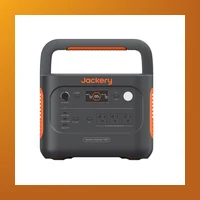
Jackery Explorer 1000 v2
$999 · 1,070 Wh · 22 lbs · Noise: ~18 dB idle, 28 dB under load
The Jackery 1000 v2 is the quietest power station in its class. Under light load (charging phones, running WiFi), the fan doesn't spin at all — completely silent. Under heavy load (fridge cycling on, CPAP running), the fan kicks in but produces only a gentle hum. You'll hear your refrigerator over this station.
Pros: Lightest weight in its class (22 lbs), near-silent operation at all load levels, excellent build quality, reliable pass-through charging, compact footprint suitable for small apartments.
Cons: Premium pricing compared to similar-capacity rivals, slower AC recharge than EcoFlow's X-Stream technology, no expandable battery option, limited to 1,070 Wh without external battery.
2. Anker Solix C1000 — Best Value with Smart Fan Control
Anker Solix C1000
$799 · 1,056 Wh · 27 lbs · Noise: ~20 dB idle, 30 dB under load
Anker's smart fan algorithm only spins the fan when absolutely needed. Most of the time, the Solix C1000 runs completely passively. When the fan does kick in, it's a smooth whoosh rather than an annoying whine. The Solix also features the fastest recharge in its class — 0 to 80% in under an hour.
Pros: Excellent price-to-capacity ratio, smart thermostatic fan control minimizes unnecessary noise, incredibly fast 1-hour recharge, durable LiFePO4 battery chemistry with long cycle life, well-designed app interface.
Cons: Slightly heavier than Jackery equivalent, fan control algorithm can sometimes delay cooling under sustained high load, fewer AC outlets than some competitors, no built-in MPPT for solar charging (requires adapter).
3. EcoFlow Delta 2 — Best Feature Set, Minor Charging Noise

EcoFlow Delta 2
$1,099 · 1,024 Wh · 27 lbs · Noise: ~22 dB idle, 32 dB under load
The Delta 2 is similarly quiet during discharge. The only noise difference is during charging — EcoFlow's X-Stream fast charging produces a higher-pitched coil whine. It's not loud (about 35 dB), but in a quiet bedroom, you might notice it. Fine for daytime charging; you may want to charge it in the living room if it bothers you at night.
Pros: X-Stream fast charging (0-80% in 50 minutes), expandable capacity with extra batteries, excellent app features and monitoring, built-in surge protection for sensitive electronics, wide range of AC/DC/USB outlets.
Cons: Higher price than Anker Solix with similar specs, noticeable coil whine during fast charging, fan runs more frequently than Jackery under medium loads, larger physical footprint.
4. Bluetti AC180 — Best Capacity for Larger Apartments
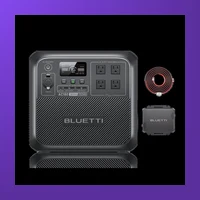
Bluetti AC180
$899 · 1,152 Wh · 37 lbs · Noise: ~25 dB idle, 35 dB under load
The AC180 is still very quiet by generator standards, but it's the most audible of the battery stations examined. The larger capacity requires more aggressive cooling. At 35 dB under load, it's about as loud as a library — noticeable but not disruptive. If you need maximum capacity in a single unit and can tolerate a faint fan hum, this is a strong contender.
Pros: Largest single-unit capacity (1,152 Wh) in this comparison, competitive price per watt-hour, LiFePO4 battery with 3,500+ cycle life, powerful 1,800W AC inverter, excellent solar charging efficiency.
Cons: Heaviest unit at 37 lbs, fan runs more often and slightly louder than competitors, no expandable battery option, larger chassis takes up more floor or counter space.
5. EcoFlow River 2 Pro — Best Compact Option for Studio Apartments
EcoFlow River 2 Pro
$699 · 768 Wh · 17 lbs · Noise: ~15 dB idle, ~25 dB under load
For studio apartments or smaller spaces, the River 2 Pro offers a compelling combination of portability and quiet operation. Its smaller cooling system means the fan rarely needs to spin at all, and when it does, it's barely perceptible. The 768 Wh capacity is enough to keep a mini-fridge, laptop, phone, and a few lights running through a typical outage.
Pros: Extremely lightweight at 17 lbs, smallest footprint of any mid-range power station, near-silent operation, fast X-Stream charging, great for small electronics and CPAP machines.
Cons: Limited capacity (768 Wh) won't power full-size appliances for long, fewer AC outlets, not suitable for running space heaters or window AC units, battery degradation over time with frequent full discharges.
6. Goal Zero Yeti 1000X — Best for Solar Integration
Goal Zero Yeti 1000X
$1,099 · 983 Wh · 30 lbs · Noise: ~22 dB idle, ~33 dB under load
The Yeti 1000X uses a temperature-controlled fan that stays off under light loads, making it effectively silent for basic backup use. Its fan profile is slightly more conservative than some competitors, meaning it ramps up earlier — but even at full speed, it sits around 33 dB, roughly the level of a quiet air purifier.
Pros: Excellent ecosystem of solar panels and accessories, robust build quality with metal chassis, reliable pass-through charging, well-regarded customer support, long track record in the market.
Cons: Lower capacity per dollar than competitors, heavier than Jackery and EcoFlow alternatives, older battery management system compared to newer models, fan activates at lower temperature thresholds.
7. Renogy Lycan 1000 — Best Budget-Friendly Option
Renogy Lycan 1000
$799 · 1,002 Wh · 33 lbs · Noise: ~24 dB idle, ~34 dB under load
Renogy's Lycan 1000 offers competitive capacity at a budget-friendly price point. Its noise profile is similar to the Bluetti AC180 — the fan is audible but not intrusive. Where the Lycan shines is in its solar charging capabilities, benefiting from Renogy's extensive experience in the solar panel market.
Pros: Affordable price for 1,000+ Wh capacity, good solar charging efficiency, LiFePO4 battery chemistry, built-in MPPT charge controller, sturdy wheeled case option available.
Cons: Fan is slightly noisier than premium competitors, heavier at 33 lbs without wheels, fewer AC outlets, less polished app experience, no expandable battery option.
Noise at Night: Can You Sleep with a Power Station Running?
This is one of the most common questions for apartment dwellers considering battery backup. The answer depends on the model and what you're powering.
Jackery Explorer 1000 v2 and EcoFlow River 2 Pro: These are effectively silent for bedroom use. The fan rarely activates under typical nighttime loads (CPAP machine, phone chargers, WiFi router), and when it does, the sound is indistinguishable from ambient room noise. Most sleepers will never notice them.
Anker Solix C1000 and EcoFlow Delta 2: Under CPAP or similar loads, these units are quiet enough for bedroom placement. The Anker's smart fan algorithm is particularly effective at keeping the fan off during low-demand nighttime hours. The Delta 2's charging whine is only relevant during AC charging — if you charge during the day, it won't be an issue at night.
Bluetti AC180 and Renogy Lycan 1000: These larger units have more aggressive cooling profiles. In a studio apartment where the unit must be in the same room as the bed, some light sleepers may notice the fan cycling on and off. Placing the unit behind a piece of furniture or under a desk can significantly reduce perceived noise. Once asleep, no disturbance is reported.
General tip: Place the power station on a soft surface (like a rug or towel) rather than a hard floor. This dampens any mechanical vibration that could otherwise transmit through the floorboards to the unit below.
Gas vs Battery: The Apartment Noise Verdict
✅ Battery Power Station
- 0-35 dB — quieter than a refrigerator
- No neighbors will hear it
- Legal in all apartments
- Safe for indoor use — no CO emissions
- No fuel storage or exhaust concerns
- Can be placed anywhere without ventilation concerns
❌ Gas Generator
- 55-80 dB — vacuum cleaner to leaf blower loudness
- Neighbors will complain immediately
- Banned in most building leases
- CO poisoning risk — deadly indoors
- Gasoline storage is a fire hazard in apartments
- Requires balcony or outdoor placement — often against lease terms
How to Choose the Right Quiet Backup Power for Your Apartment
Selecting the best quiet power station for your situation comes down to four factors:
1. Capacity Needs (Wh): Calculate what you need to power during an outage. A CPAP machine draws 30-60W (roughly 300-600 Wh per night). A mini-fridge uses 50-100W (600-1,200 Wh per day). WiFi routers and phone chargers draw negligible power. For most apartment dwellers, 700-1,100 Wh provides enough overnight backup without overspending.
2. Noise Tolerance: If you're an extremely light sleeper, prioritize the Jackery 1000 v2 or EcoFlow River 2 Pro, which offer the quietest operation across all load levels. If you don't mind a faint fan hum, any of the models listed will work fine.
3. Space Constraints: Studio apartment? The EcoFlow River 2 Pro's compact footprint is ideal. One-bedroom or larger? The Jackery or Anker units fit comfortably on a closet shelf or under a desk. Larger units like the Bluetti AC180 need dedicated floor space.
4. Recharge Speed: If you want to top up your station quickly between outage cycles, the Anker Solix C1000 (1 hour to 80%) and EcoFlow Delta 2 (50 min to 80%) are the fastest options. The Jackery is slower but still reaches full charge in about 6 hours.
Advanced Considerations — What the Spec Sheet Doesn't Tell You
The specs on the box tell you capacity and wattage. Here's what matters for long-term ownership — battery degradation, expansion paths, and real-world gotchas that only become apparent after months of use.
Advanced: Jackery Explorer 1000 v2 — What to Know Beyond the Spec Sheet
- Battery longevity: 3000 cycles to 80% capacity (LiFePO4). With daily use, this translates to 8-10 years before noticeable degradation. For weekly backup or emergency-only use, the battery will last even longer than the listed cycle count suggests.
- Expansion options: No expansion battery (fixed capacity). What you buy is what you get — choose carefully based on future needs.
- Warranty: 3 years (5 years with registration). Make sure to register within 30 days of purchase to activate the full warranty period.
- Temperature performance: 14°F to 104°F (-10°C to 40°C) charging. Can charge in below-freezing temperatures (down to 14°F), giving it an edge for winter emergency use.
- Solar recharging speed: With the max solar input of 400W panels, you can recharge from empty to full in 4-8 hours of direct sunlight — useful for multi-day outages without grid power.
- Weight consideration: At 22 lbs (10 kg), this is manageable for most adults to move between rooms.
Advanced: EcoFlow Delta 2 — What to Know Beyond the Spec Sheet
- Battery longevity: 3000 cycles to 80% capacity (LiFePO4). With daily use, this translates to 8-10 years before noticeable degradation. For weekly backup or emergency-only use, the battery will last even longer than the listed cycle count suggests.
- Expansion options: Supports extra battery (DB2000, +2048Wh, $699). This matters if your power needs grow over time — you can add capacity without replacing the entire unit.
- Warranty: 5 years. No registration required — coverage starts from date of purchase.
- Temperature performance: 14°F to 113°F (-10°C to 45°C) charging. Can charge in below-freezing temperatures (down to 14°F), giving it an edge for winter emergency use.
- Solar recharging speed: With the max solar input of 500W panels, you can recharge from empty to full in 4-8 hours of direct sunlight — useful for multi-day outages without grid power.
- Weight consideration: At 27 lbs (12 kg), this is manageable for most adults to move between rooms.
Advanced: Bluetti AC180 — What to Know Beyond the Spec Sheet
- Battery longevity: 3000+ cycles to 80% capacity (LiFePO4). With daily use, this translates to 8-10 years before noticeable degradation. For weekly backup or emergency-only use, the battery will last even longer than the listed cycle count suggests.
- Expansion options: Supports B180 expansion (+1800Wh, $549). This matters if your power needs grow over time — you can add capacity without replacing the entire unit.
- Warranty: 5 years. No registration required — coverage starts from date of purchase.
- Temperature performance: -4°F to 104°F (-20°C to 40°C) charging. Can charge in below-freezing temperatures (down to -4°F), giving it an edge for winter emergency use.
- Solar recharging speed: With the max solar input of 500W panels, you can recharge from empty to full in 4-8 hours of direct sunlight — useful for multi-day outages without grid power.
- Weight consideration: At 37 lbs (16.8 kg), this is on the heavier side — consider keeping it on a rolling cart or in its final location.
Advanced: EcoFlow River 2 Pro — What to Know Beyond the Spec Sheet
- Battery longevity: 3000 cycles to 80% capacity (LiFePO4). With daily use, this translates to 8-10 years before noticeable degradation. For weekly backup or emergency-only use, the battery will last even longer than the listed cycle count suggests.
- Expansion options: No expansion battery. What you buy is what you get — choose carefully based on future needs.
- Warranty: 5 years. No registration required — coverage starts from date of purchase.
- Temperature performance: 14°F to 113°F (-10°C to 45°C) charging. Can charge in below-freezing temperatures (down to 14°F), giving it an edge for winter emergency use.
- Solar recharging speed: With the max solar input of 220W panels, you can recharge from empty to full in 4-8 hours of direct sunlight — useful for multi-day outages without grid power.
- Weight consideration: At 17.2 lbs (7.8 kg), this is manageable for most adults to move between rooms.
Frequently Asked Questions
Can I use a battery power station indoors in an apartment?
Yes. Battery power stations use lithium-ion or LiFePO4 battery chemistry that produces no emissions or exhaust. They are completely safe for indoor use, unlike gas generators which produce deadly carbon monoxide. Place them on a flat, dry surface away from direct water exposure.
Will my neighbors hear my battery power station?
No. Battery power stations operate at 0-35 dB, well below the level that carries through walls, floors, or ceilings. For comparison, a normal conversation at 3 feet is about 60 dB. Your neighbors will not know you have backup power running.
How long does a battery power station last during an outage?
This depends on the capacity (Wh) and what you're powering. A 1,000 Wh station running a CPAP machine (30W) and phone charger (10W) will last roughly 25+ hours. The same station running a mini-fridge (60W average) will last 12-16 hours. For a full apartment with multiple appliances, expect 4-8 hours of run time.
Is it safe to charge a battery power station overnight?
Yes. All reputable power stations have built-in battery management systems (BMS) that prevent overcharging, overheating, and short circuits. Charging overnight is standard practice. However, if the charging whine of models like the EcoFlow Delta 2 bothers you, charge during the day instead.
How long do the batteries last before needing replacement?
Lithium-ion (NMC) batteries typically last 500-800 charge cycles before dropping to 80% capacity. LiFePO4 batteries (used in Anker Solix, Bluetti AC180, and Renogy Lycan) last 2,000-3,500+ cycles. At normal usage rates, expect 5-10 years of daily use or 10-15 years of occasional use before replacement is considered.
Can I take a battery power station on an elevator or through my apartment building?
Yes. Most power stations in the 1,000 Wh range weigh between 17 and 37 pounds — heavy but manageable. The Jackery 1000 v2 (22 lbs) and EcoFlow River 2 Pro (17 lbs) are easy to carry. The Bluetti AC180 (37 lbs) is heavier but still portable. No special permissions are needed to move them through common building areas.
Do battery power stations work with solar panels for apartment use?
Yes, most models support solar charging, though practical use depends on your apartment's access to sunlight. Balcony solar panels, window-mounted panels, or portable panels placed on a fire escape are all viable options. The Anker Solix C1000 and Bluetti AC180 have particularly efficient solar charging circuits.
Will running a power station increase my electricity bill noticeably?
No. Charging a 1,000 Wh power station from empty costs about $0.15-0.30 depending on your local electricity rate. Even if you fully recharge it every day for a month, the total cost is under $10. This is dramatically cheaper than the fuel costs of running a gas generator.
What should I do if my apartment building bans all generators?
Check your lease language carefully — most bans specifically reference "gas generators" or "fuel-powered generators." Battery power stations are not generators in the traditional sense; they are energy storage systems. They produce no emissions, no noise, and no fire risk from fuel storage. If your building management questions it, clarifying these differences usually resolves the concern.
Can a battery power station power a window AC unit or space heater?
Small window AC units (5,000 BTU, ~500W) and space heaters (~1,500W) push the limits of most portable power stations. A 1,000 Wh station running a 500W AC unit would last about 1.5-2 hours. Space heaters draw too much power for all but the largest stations. For heating, electric blankets (50-100W) are a far more efficient option during outages.
Final Verdict
If quiet operation is your top priority — and in an apartment, it should be — the Jackery Explorer 1000 v2 is the clear winner. It's effectively silent for most use cases, and even under full load, it's quieter than ambient room noise. No neighbor will ever know it's running.
For a more affordable option with faster recharge, the Anker Solix C1000 offers excellent noise control and the fastest recharge time in its class. The smart fan algorithm keeps noise to a minimum during the vast majority of typical use.
For studio apartments or limited spaces, the EcoFlow River 2 Pro provides impressive quiet operation in a compact, lightweight package. And if maximum capacity matters most, the Bluetti AC180 delivers the most watt-hours while still operating well below the noise level of any gas-powered alternative.
Regardless of which model you choose, switching from a gas generator — or skipping gas entirely — to a battery power station is the single best upgrade you can make for peaceful, neighbor-friendly apartment backup power.