Anker vs Jackery Portable Power Stations — Which Brand Wins in 2026?
Anker vs Jackery — Full Brand Comparison
If you're shopping for a portable power station for your apartment or home backup, two brands consistently top the search results: Anker (with its SOLIX series) and Jackery (with its Explorer lineup). Both are household names with strong reputations, but they take noticeably different approaches to design, pricing, battery technology, and customer support.
We analyzed their flagship and mid-range models across six critical dimensions — battery chemistry, real-world performance, pricing, warranty coverage, app ecosystem, and overall build quality — to help you decide which brand deserves your money in 2026.
Here's the short version: Anker wins on raw specs and expandability, while Jackery wins on simplicity and price. But the right choice depends entirely on what you need it for.
🥇 Anker SOLIX F2000 — Best Overall
Specs: 2048Wh | 1800W continuous / 2400W surge | LiFePO4 | 49.6 lbs (22.5 kg) | $1,599
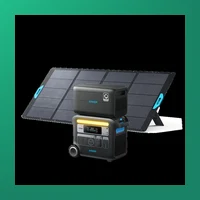
The Anker SOLIX F2000 is Anker's flagship home backup unit, and it's a serious contender for anyone needing reliable whole-home support during outages. With 2048Wh of usable capacity and 1800W of continuous output, it can run a refrigerator, a few lights, a CPAP machine, and even a small window AC unit simultaneously.
What sets the F2000 apart is its expandability. You can add an extra battery (+2048Wh, $799) to double the capacity, bringing it to over 4kWh — enough to power critical appliances for 12–24 hours. The LiFePO4 chemistry means 3,000 cycles to 80% capacity, translating to roughly 8–10 years of regular use.
Its 600W solar input is generous for its class, and the 0–80% AC recharge in 1.5 hours means you can top it up quickly between outages. The Anker app provides real-time monitoring and remote control, and the UPS mode switches in under 20ms — fast enough for sensitive electronics.
🥈 Jackery Explorer 1000 v2 — Best Value
Specs: 1070Wh | 1500W continuous / 3000W surge | LiFePO4 | 22 lbs (10 kg) | $799
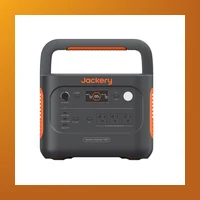
Jackery's latest Explorer 1000 v2 is a significant upgrade over its predecessor. The switch from NMC to LiFePO4 battery chemistry was the biggest improvement — now you get 3,000 cycles instead of 500, making it a genuinely long-term investment rather than a disposable backup.
At 22 lbs, it's one of the lightest power stations in its capacity class. The built-in handle makes it genuinely portable, unlike heavier units that require a cart. The 1500W inverter handles most apartment essentials: a refrigerator (600–800W startup), CPAP (30–60W), lights, phones, and a modem/router.
Jackery's strength lies in its simplicity. The interface is intuitive — one button to turn on, clear LED indicators for remaining charge and output wattage. No app required, no confusing modes. Just plug in and power on. However, the 1000 v2 is not expandable, so what you buy is what you get. And its 400W solar input is adequate but not class-leading.
🥉 Anker SOLIX C800 Plus — Best Portable
Specs: 768Wh | 1000W continuous / 2000W surge | LiFePO4 | 22 lbs (10 kg) | $549

The Anker SOLIX C800 Plus fills the sweet spot between capacity and portability. At 768Wh and 22 lbs, it's light enough to carry from room to room or toss in the car for a camping trip, yet powerful enough to keep your essentials running during a 4–8 hour outage.
Its 1000W pure sine wave inverter handles the vast majority of apartment appliances — CPAP machines, laptops, monitors, small refrigerators, fans, and LED lights. The 0–80% AC recharge in 1 hour is class-leading, and the 500W solar input means you can recharge in about 2 hours of good sunlight.
Like all Anker SOLIX units, the C800 Plus uses LiFePO4 batteries rated for 3,000+ cycles. It also supports the Anker app for monitoring from your phone. The main trade-off versus the F2000 is the lack of expansion battery support — this is a fixed-capacity unit.
Price Comparison: Anker vs Jackery
Pricing is where the two brands diverge most clearly.
Anker positions itself as the premium option. The SOLIX F2000 at $1,599 is expensive, but you're paying for expandability, higher solar input, and faster AC charging. The C800 Plus at $549 is competitively priced for its specs. Anker rarely runs deep discounts, but you'll occasionally see 10–15% off during Prime Day or Black Friday.
Jackery is the value leader. The Explorer 1000 v2 at $799 offers excellent value for a LiFePO4 unit with 1070Wh capacity. Jackery frequently runs sales — it's common to see 20–30% off during holiday weekends. The Explorer 500 at $449 and the Explorer 300 Plus at $299 round out a lineup that's consistently affordable.
For sheer dollars-per-watt-hour, Jackery wins on the low end. But when you factor in expandability and faster charging, Anker's higher price starts to make more sense for serious home backup users.
Battery Technology Deep Dive
Both brands have largely moved to LiFePO4 (Lithium Iron Phosphate) chemistry across their 2025–2026 lineups — and that's great news for consumers. LiFePO4 is safer, runs cooler, and lasts 3–6 times longer than older NMC (Nickel Manganese Cobalt) batteries.
Anker was an early adopter of LiFePO4 across its entire SOLIX range and has never used NMC in its power stations. Jackery's older models (Explorer 1000 and 1500, without the "v2" suffix) used NMC cells rated for only 500 cycles — a major drawback. The newer v2 models and the Explorer 2000 Plus are all LiFePO4.
Key takeaway: If you're buying Jackery, make sure it's a v2 or "Plus" model. Older stock with NMC batteries is still available at some retailers at discount prices — but the 500-cycle lifespan makes them a poor long-term investment.
Warranty & Customer Support
This is an area where the two brands differ significantly.
Anker offers a 5-year warranty on all SOLIX power stations — no registration required. Coverage starts from the date of purchase, and Anker's customer support is consistently rated highly (4.5/5 on Trustpilot). They offer email, phone, and live chat support, and replacement units are typically shipped within 3–5 business days.
Jackery offers a 3-year warranty standard, with an extension to 5 years if you register the product within 30 days of purchase. This is an important detail — many buyers miss the registration window and end up with only 3 years of coverage. Jackery's customer support is rated slightly lower (4.2/5 on Trustpilot), with occasional complaints about wait times during peak seasons.
Verdict: Anker wins on warranty length and ease of activation. Jackery's warranty is decent but requires proactive registration.
App Ecosystem & Smart Features
Both brands offer mobile apps for monitoring and control, but they take different approaches.
Anker's app provides real-time data on charge level, input/output wattage, estimated runtime remaining, and charging status. You can adjust AC output settings, enable energy-saving modes, and receive push notifications when the battery is full or low. The app is clean, responsive, and updated regularly.
Jackery's app (available for newer v2 models) offers similar core functionality — charge monitoring, output tracking, and firmware updates — but with a simpler, more basic interface. It lacks some of the granular controls found in the Anker app, such as adjustable charging speed or AC timeout settings.
Neither app requires a subscription or account, which is a nice touch. But for tech-savvy users who want data and control, Anker's app is clearly more polished.
Final Verdict
Choose Anker if: You want the best specs, expandable capacity, a polished app, and a hassle-free 5-year warranty. The SOLIX F2000 is the better buy for serious home backup where you need maximum power and future flexibility.
Choose Jackery if: You want the best value for money, a lightweight and simple design, and you don't need expansion batteries. The Explorer 1000 v2 is an excellent mid-range unit that covers most apartment needs without breaking the bank.
Both brands make excellent products. Your choice comes down to whether you value expandability and premium features (Anker) or simplicity and affordability (Jackery).
Advanced Considerations — What the Spec Sheet Doesn't Tell You
The specs on the box tell you capacity and wattage. Here's what matters for long-term ownership — battery degradation, expansion paths, and real-world gotchas that only become apparent after months of use.
Advanced: Anker SOLIX F2000 — What to Know Beyond the Spec Sheet
- Battery longevity: 3000 cycles to 80% capacity (LiFePO4). With daily use, this translates to 8-10 years before noticeable degradation. For weekly backup or emergency-only use, the battery will last even longer than the listed cycle count suggests.
- Expansion options: Supports extra battery (+2048Wh, $799). This matters if your power needs grow over time — you can add capacity without replacing the entire unit.
- Warranty: 5 years. No registration required — coverage starts from date of purchase.
- Temperature performance: 14°F to 113°F (-10°C to 45°C) charging. Can charge in below-freezing temperatures (down to 14°F), giving it an edge for winter emergency use.
- Solar recharging speed: With the max solar input of 600W panels, you can recharge from empty to full in 4-8 hours of direct sunlight — useful for multi-day outages without grid power.
- Weight consideration: At 49.6 lbs (22.5 kg), this is on the heavier side — consider keeping it on a rolling cart or in its final location.
Advanced: Jackery Explorer 1000 v2 — What to Know Beyond the Spec Sheet
- Battery longevity: 3000 cycles to 80% capacity (LiFePO4). With daily use, this translates to 8-10 years before noticeable degradation. For weekly backup or emergency-only use, the battery will last even longer than the listed cycle count suggests.
- Expansion options: No expansion battery (fixed capacity). What you buy is what you get — choose carefully based on future needs.
- Warranty: 3 years (5 years with registration). Make sure to register within 30 days of purchase to activate the full warranty period.
- Temperature performance: 14°F to 104°F (-10°C to 40°C) charging. Can charge in below-freezing temperatures (down to 14°F), giving it an edge for winter emergency use.
- Solar recharging speed: With the max solar input of 400W panels, you can recharge from empty to full in 4-8 hours of direct sunlight — useful for multi-day outages without grid power.
- Weight consideration: At 22 lbs (10 kg), this is manageable for most adults to move between rooms.
Frequently Asked Questions
Which brand has better battery life?
Both Anker and Jackery now use LiFePO4 chemistry in their current models, rated for 3,000 cycles to 80% capacity. With weekly use, that's 8–10 years of service. The exception is older Jackery models (non-v2) which use NMC cells rated for only 500 cycles — about 2–3 years.
Can I use Anker solar panels with Jackery power stations?
Yes, as long as the connector is compatible. Most modern portable power stations use standard MC4 or Anderson connectors. However, charging speed may be suboptimal since each brand optimizes its Maximum Power Point Tracking (MPPT) for its own panels. For best results, use the same brand for panels and station.
Which brand has better resale value?
Anker tends to hold its value better due to the longer warranty and expandable design. A 3-year-old Anker SOLIX F2000 in good condition typically sells for 50–60% of its original price, compared to 40–50% for a Jackery of the same age.
Are Anker power stations quieter than Jackery?
Both brands use passive cooling (no fans) at low loads. Under heavy load (above 70% rated output), both units activate internal cooling fans. The noise level is similar — about 25–30 dB for the fan, roughly equivalent to a whisper or a quiet library.
Which brand offers better expansion options?
Anker wins decisively here. The SOLIX F2000 supports an extra battery (+2048Wh), effectively doubling capacity. Jackery's Explorer 1000 v2 has no expansion option — you'd need to buy a completely separate unit to increase capacity. Jackery's Explorer 2000 Plus does support expansion batteries, but it's a much larger and more expensive setup.
Ready to buy? Check the latest prices on Amazon:
Anker SOLIX F2000 Jackery Explorer 1000 v2 Anker SOLIX C800 Plus